 By Giovanni Carlo P. Bagayas (Gio), home gardener since Grade 5. Updated .
Some links in this guide are Amazon affiliate links. If you buy through them, I may earn a small commission at no extra cost to you. Disclosure.
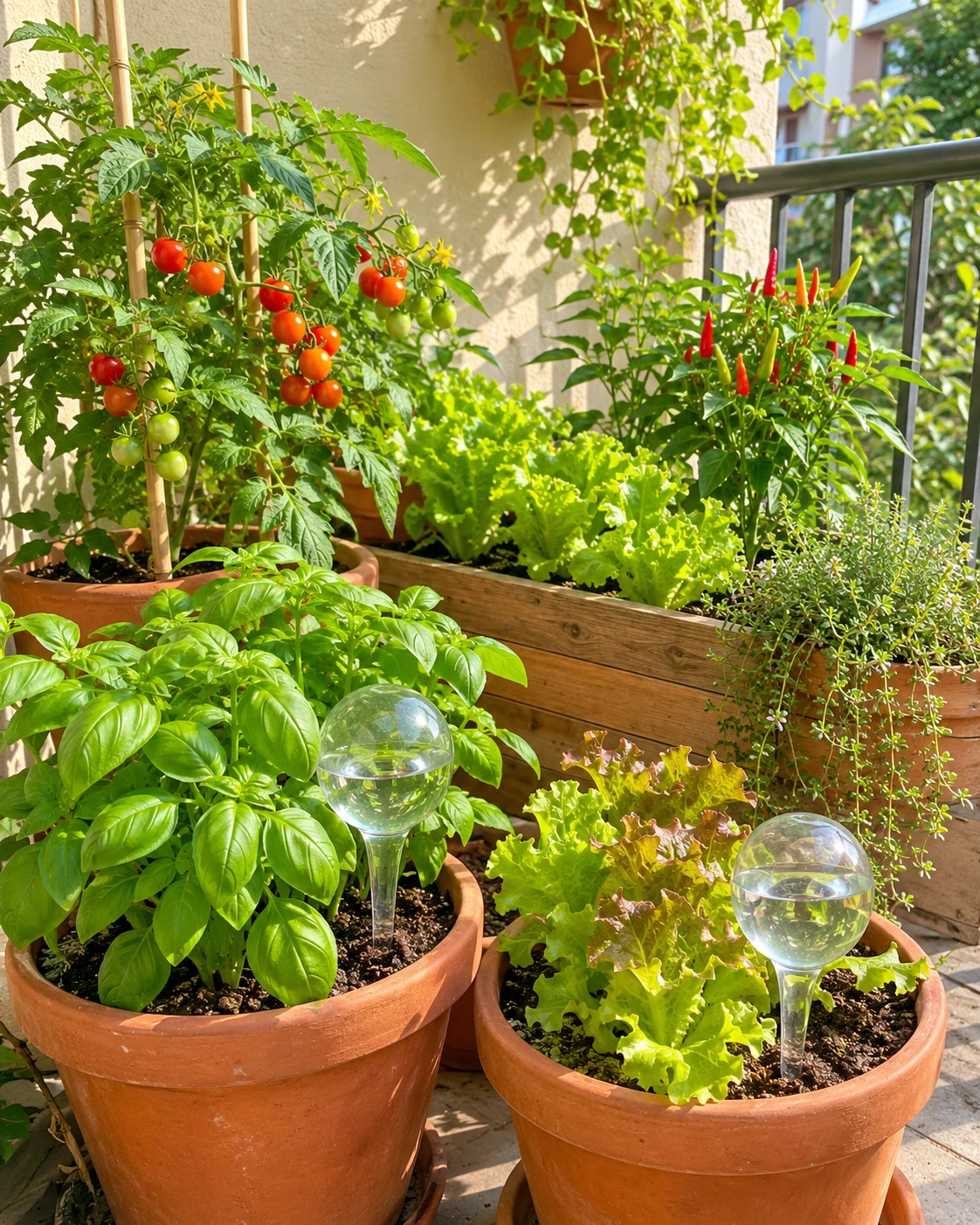
To start a balcony garden, first count how many hours of direct sun your balcony gets, then pick plants that match it. Use lightweight pots with drainage holes and fresh potting mix, not garden soil. Start with 3 to 5 easy plants, such as basil, lettuce and cherry tomatoes, and add more once you have a watering routine.
How much sun does your balcony get?
Sun decides what you can grow, so check it before you buy anything. On a clear day, note when direct sunlight first touches the spot where your pots will sit and when it leaves. Balconies facing south (in the Northern Hemisphere) usually get the most sun; north-facing balconies get the least.
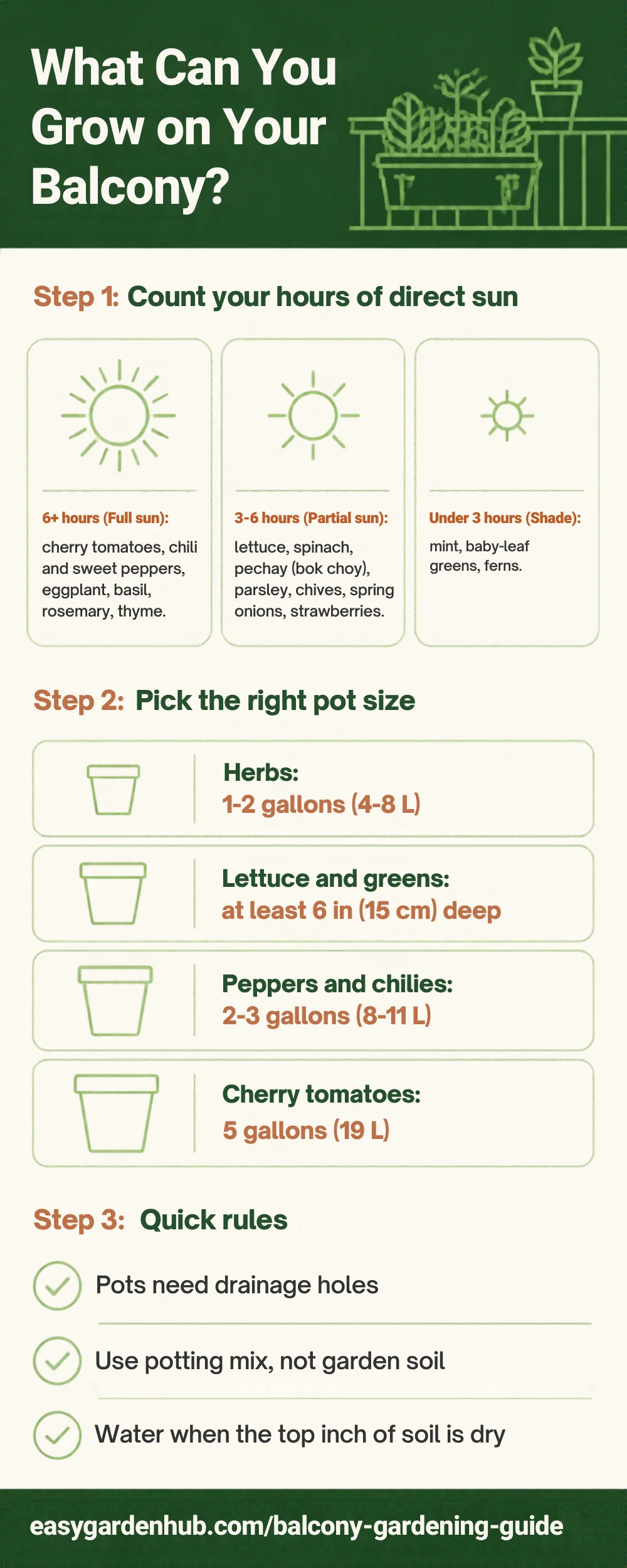
| Direct sun per day | Light level | Good plants to start with |
|---|---|---|
| 6+ hours | Full sun | Cherry tomatoes, chili and sweet peppers, eggplant, basil, rosemary, thyme |
| 3 to 6 hours | Partial sun | Lettuce, spinach, pechay (bok choy), parsley, chives, spring onions, strawberries |
| Under 3 hours | Shade | Mint, leafy greens for baby leaves, ferns and other shade-tolerant ornamentals |
Fruiting plants such as tomatoes and peppers need the most sun. If your balcony gets less than 6 hours, grow leafy greens and herbs instead.
How do you start a balcony garden?
- Check sun, wind and rules. Count the hours of direct sun, notice how windy it gets, and check your building’s rules on pots, railings and dripping water.
- Pick 3 to 5 plants that match your light. Start small. A few healthy pots teach you more than a crowded balcony you can’t keep up with.
- Get the right pots and potting mix. Every pot needs drainage holes and a saucer. Fill with fresh potting mix.
- Set up a watering routine. Check pots every morning in hot weather. Add self-watering pots or spikes if you travel or work long days.
- Feed and harvest. Container plants use up nutrients fast. Feed every 2 to 4 weeks during the growing season, and harvest herbs often to keep them bushy.
Step-by-step: how to start a balcony garden | Apartment balcony gardening guide
Balcony starter gear I recommend
The basics for a first balcony garden: the right soil, light pots, a way to check moisture, and plant food.
Burpee Premium Organic Potting Mix
An organic mix made for containers, which stays light and drains well, unlike garden soil.
Best for: Filling any balcony pot or planter
Check price on AmazonLand Guard Thickened Fabric Grow Bags
Much lighter than clay or ceramic pots and they breathe, so roots stay healthy.
Best for: Tomatoes and peppers on a weight budget
Check price on AmazonBTRAM Railing Planter with Adjustable Brackets
Adjustable brackets hold it securely on the railing, which frees up the floor for bigger pots.
Best for: Balconies with little floor space
Check price on AmazonSoil Moisture, Temperature and Light Meter
Push the probe into the soil and read moisture, temperature and light, so you stop guessing.
Best for: Knowing exactly when to water
Check price on AmazonSelf-Watering Planter with Water Level Indicator
A bottom reservoir with a water gauge, so you can see when it needs a refill.
Best for: Herbs and vegetables, week-long gaps
Check price on AmazonEZ-GRO All-Purpose and Blossom Booster Fertilizer
Container plants use up nutrients fast; a liquid feed every few weeks keeps them productive.
Best for: Feeding herbs and vegetables in pots
Check price on AmazonAmazon affiliate links. Prices and availability change, so check the current price on Amazon. As an Amazon Associate I earn from qualifying purchases.
[EDIT: 2 to 3 sentences on your own container setup: which plants did best for you in pots, and how much sun they get in your Labangan backyard.]
[EDIT: One mistake you made early on, such as pots without drainage or a plant that needed more sun, and what you changed.]
What are the easiest plants to grow on a balcony?
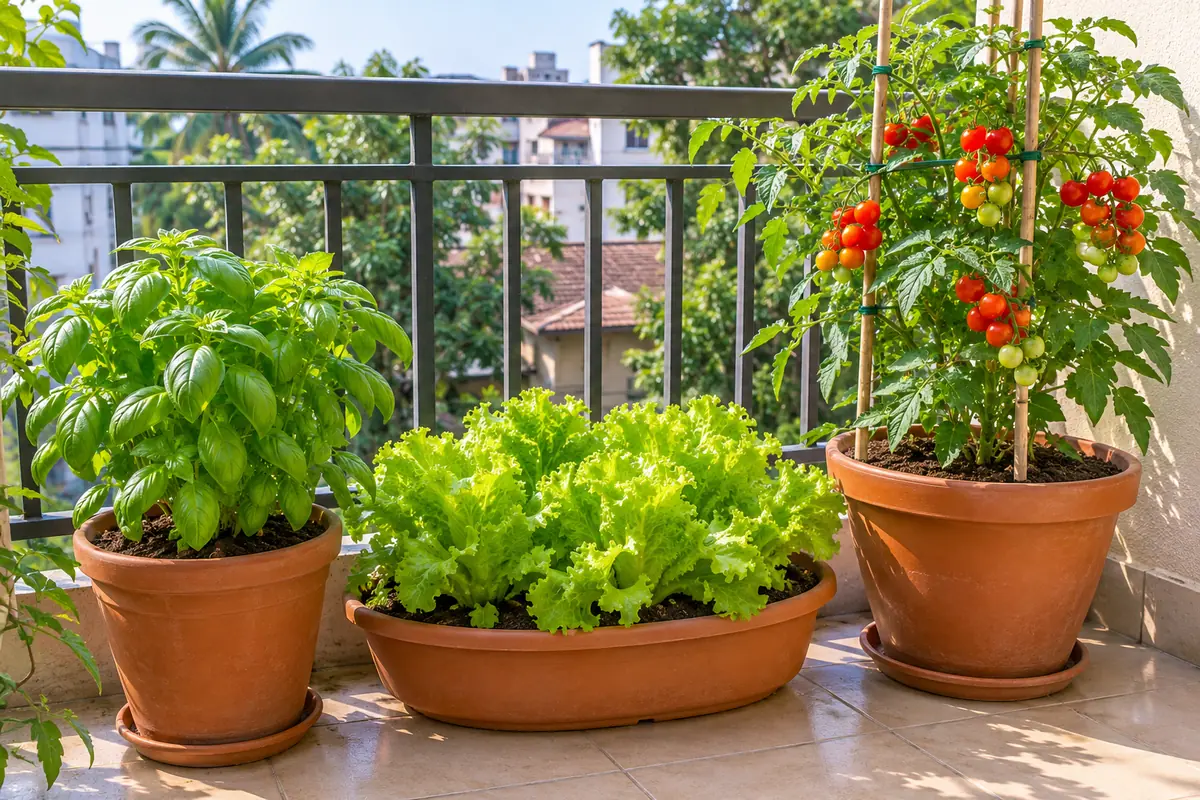
The easiest balcony plants are herbs (basil, mint, chives, parsley), leafy greens (lettuce, spinach, pechay) and compact fruiting plants (cherry tomatoes, chili peppers). They grow well in containers, recover quickly from small mistakes, and give you something to harvest within weeks.
Mint spreads aggressively, so always give it its own pot.
Best plants for small balcony gardens | Best herbs for balcony pots
What size pots do balcony plants need?
Bigger pots dry out more slowly and grow healthier plants, so choose the largest pot your space and weight limit allow.
| Plant | Minimum pot size | Notes |
|---|---|---|
| Cherry tomatoes | About 5 gallons (19 liters) | Needs a stake or cage |
| Peppers and chilies | About 2 to 3 gallons (8 to 11 liters) | One plant per pot |
| Herbs | About 1 to 2 gallons (4 to 8 liters) | Several small herbs can share a long planter |
| Lettuce and leafy greens | At least 6 inches (15 cm) deep | Wide, shallow planters work well |
Plastic, resin and fabric pots weigh much less than terracotta or ceramic, which matters on a balcony.
Best planters for small spaces | Small balcony garden ideas
What soil should you use in balcony pots?
Use a bagged potting mix made for containers, not garden soil. Garden soil packs down in pots, drains poorly and is much heavier when wet. A good potting mix stays light and airy so roots get both water and oxygen.
What soil mix works best for container gardens | Container gardening for beginners
How often should you water balcony plants?
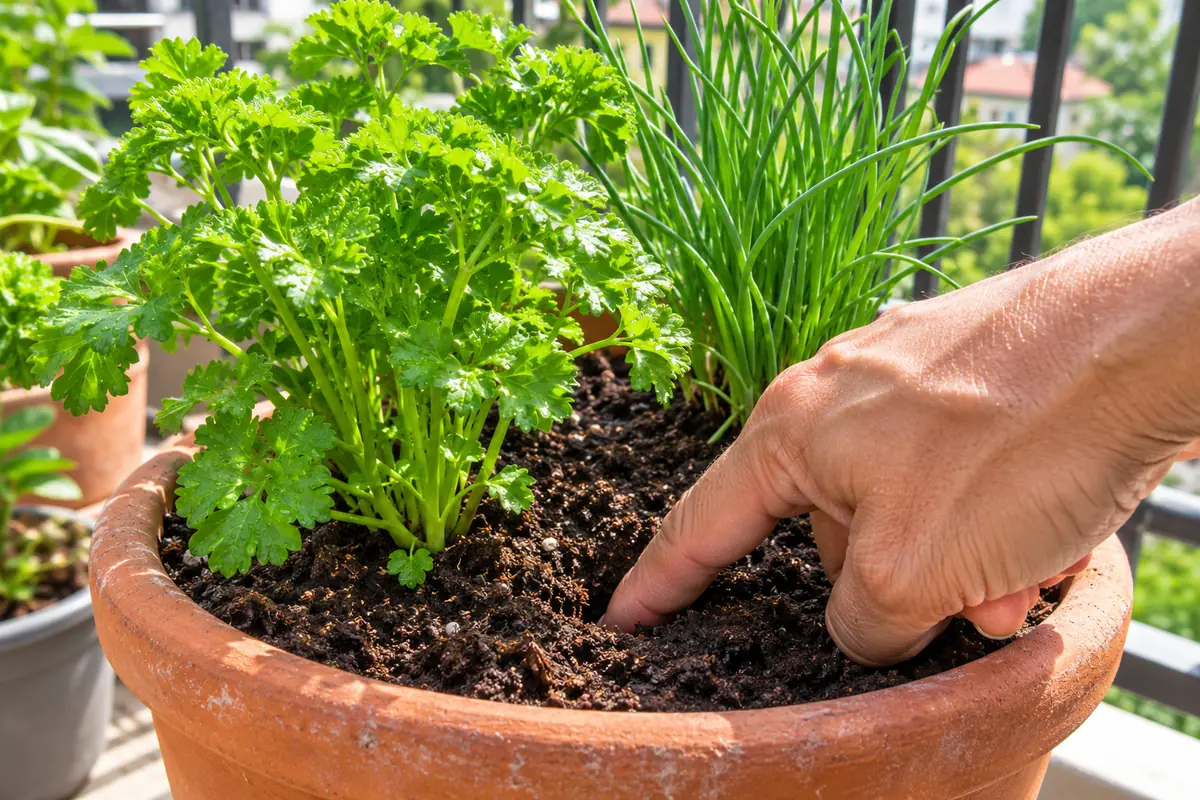
Water when the top inch (about 2.5 cm) of soil feels dry. In hot, sunny or windy weather that can mean every day, especially for small pots; in cool weather it may be every few days. Water slowly until it drains from the bottom, then empty the saucer so roots don’t sit in water.
If you can’t water daily, self-watering planters, globes or spikes bridge the gaps.
Self-watering plant guide | Self-watering planters for balconies | Self-watering balcony setup
Is your balcony safe for a garden?
Most balconies can hold a few pots, but wet soil is heavy, so check your building’s rules or ask the building manager before adding large planters or raised beds. A few habits keep your garden safe for you and your neighbors:
- Use lightweight pots and potting mix, and keep the heaviest pots on the floor rather than on the railing.
- Secure railing planters with brackets made for railings, so wind can’t knock them over.
- Use saucers so water doesn’t drip onto balconies below.
- On high, windy floors, choose compact plants and stake tall ones.
Common mistakes
- Choosing sun-loving vegetables for a shady balcony.
- Using pots without drainage holes.
- Filling pots with garden soil instead of potting mix.
- Starting with too many plants at once.
- Forgetting to feed plants that grow in containers.
FAQ
Can you grow vegetables on a balcony?
Yes. Cherry tomatoes, peppers, lettuce, spinach and pechay all grow well in containers. Fruiting vegetables need about 6 hours of direct sun; leafy greens manage with less.
What can I grow on a balcony with no direct sun?
Choose shade-tolerant plants such as mint and ferns, or grow leafy greens and harvest them young. Fruiting vegetables like tomatoes won’t produce well without direct sun.
How many pots can a balcony hold?
It depends on the building. Wet soil is heavy, so check your building’s rules or ask the manager before adding large planters, and keep heavy pots on the floor.
Do balcony plants need fertilizer?
Yes. Nutrients wash out of pots with every watering, so feed container plants every 2 to 4 weeks during the growing season.
Grow vegetables in small spaces
My step-by-step e-book walks you through growing food in containers, from choosing pots to harvesting.
See the garden e-books