 By Giovanni Carlo P. Bagayas (Gio), home gardener since Grade 5. Updated . Part of the Self-Watering Plant Guide.
Some links in this post are Amazon affiliate links. If you buy through them, I may earn a small commission at no extra cost to you. Disclosure.
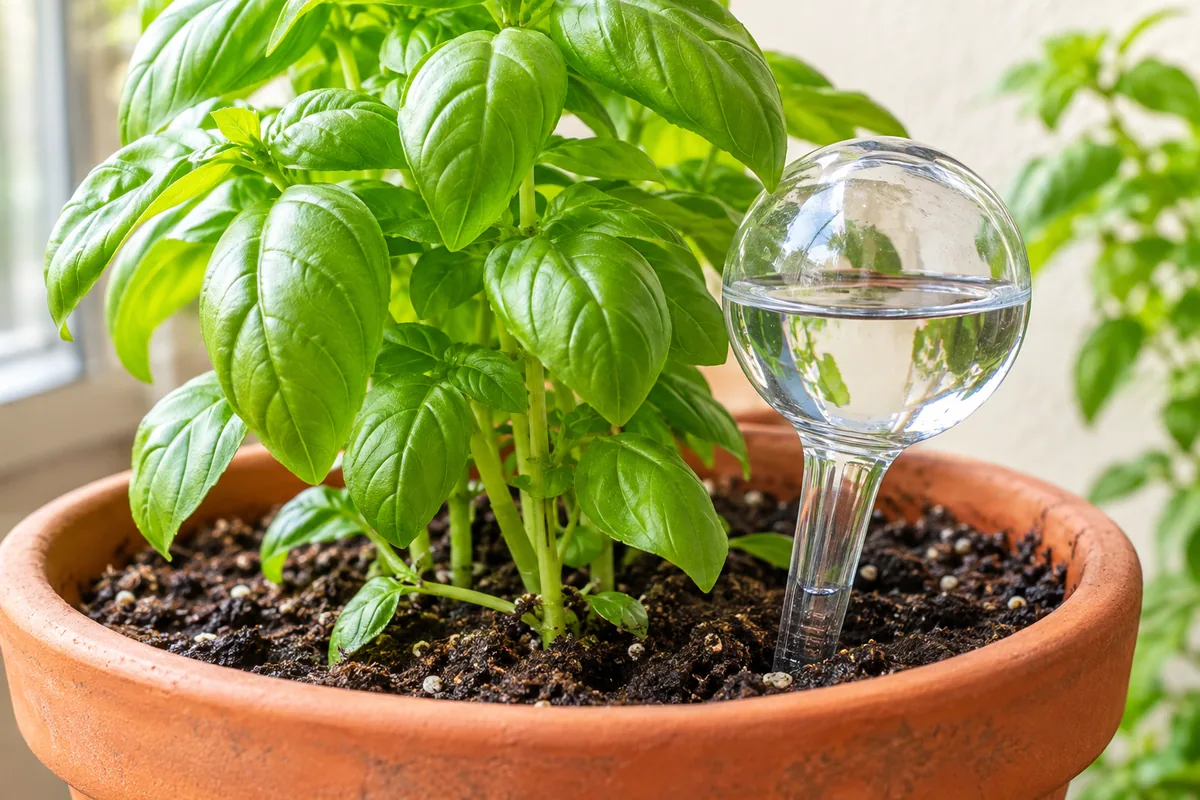
Yes, watering globes work, but only for short gaps. They keep small to medium pots evenly moist for a few days by releasing water as the soil dries. They don’t hold enough water for large pots, thirsty vegetables in full sun, or trips longer than a long weekend.
How do watering globes work?
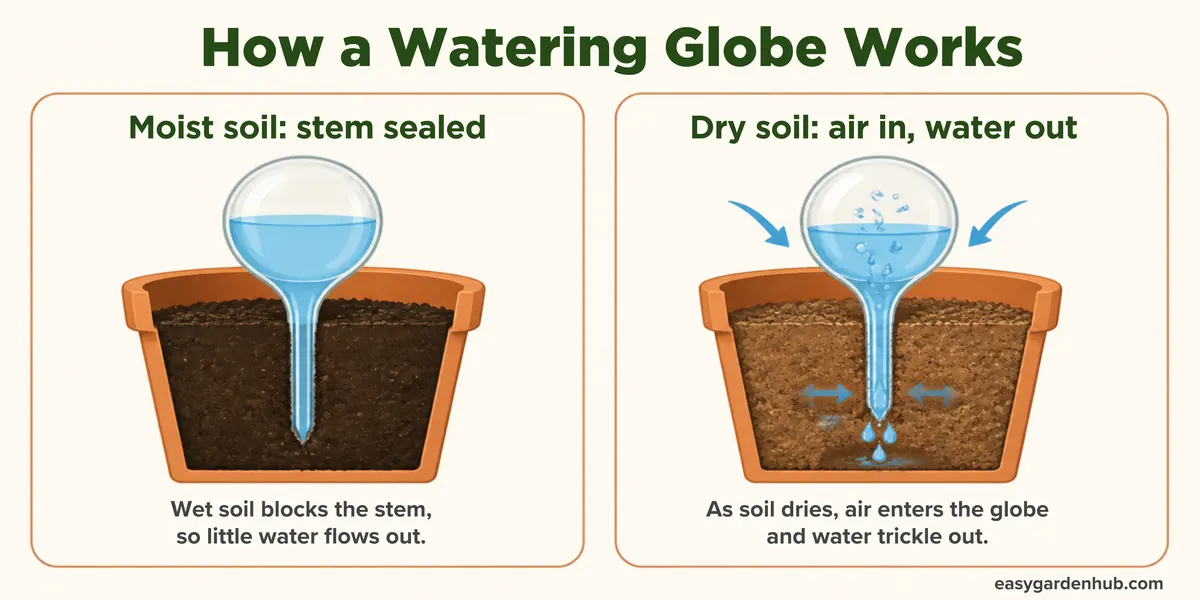
A watering globe is a glass or plastic bulb with a long, narrow stem that you push into the soil. When the soil around the stem is moist, it seals the opening and almost no water comes out. As the soil dries, air slips into the stem, bubbles up into the globe, and lets a little water flow out to replace it.
That means a globe roughly follows your plant’s needs: it releases more water when the soil dries quickly and less when it stays damp.
How long does a watering globe last?
Usually a few days. Product listings often promise up to two weeks, but that only happens in small pots, in shade, with plants that drink little. In a sunny spot or a hot climate, a single globe can empty in a day or two.
| Condition | Globe empties faster | Globe lasts longer |
|---|---|---|
| Pot size | Large pot, lots of soil | Small pot |
| Light and heat | Full sun, hot weather | Shade, cool room |
| Plant type | Tomatoes, peppers, leafy greens | Small, slow-growing plants |
| Soil | Sandy, fast-draining mix | Moisture-holding potting mix |
| Pot material | Unglazed terracotta | Plastic or glazed ceramic |
Test any globe at home for a few days before you rely on it for a trip.
[EDIT: Which pot and plant you tested the globe in, how much sun it got, and how many days it lasted before it was empty.]
[EDIT: What went wrong or surprised you, e.g. a clogged stem, or the globe emptying in one hot afternoon, and what you changed.]
When do watering globes work best?
- Indoor houseplants in small to medium pots.
- Long weekends and short trips of a few days.
- Busy weeks, as a backup between your normal waterings.
- Herbs on a windowsill that wilt when you forget them for a day.
Skip them for large outdoor containers, vegetables in full sun, succulents and cacti (which need their soil to dry out), and trips longer than about 4 or 5 days. For those, see the other self-watering methods.
Which plants are best for watering globes?
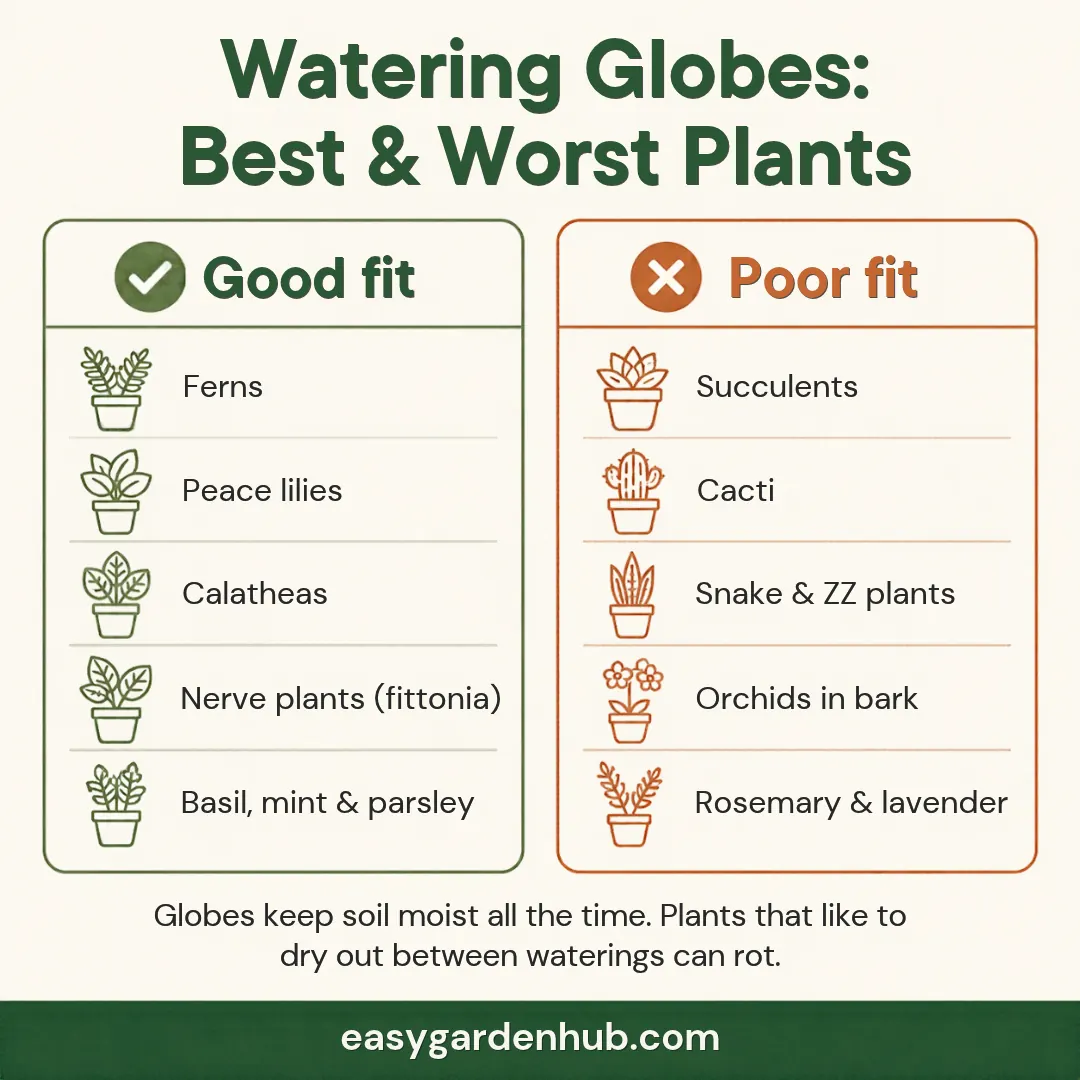
Watering globes suit plants that like evenly moist soil and wilt when they dry out. They’re a poor match for plants that need to dry out between waterings, because a globe keeps the soil damp all the time.
| Good fit | Poor fit |
|---|---|
| Ferns (Boston, maidenhair) | Succulents |
| Peace lilies | Cacti |
| Calatheas and prayer plants | Snake plants and ZZ plants |
| Nerve plants (fittonia) | Orchids potted in bark |
| Basil, mint and parsley | Rosemary and lavender |
Plants such as monsteras, philodendrons and pothos sit in between: a globe helps them through a short trip, but don’t leave one in their pot all the time.
Why is my watering globe not working?
It empties in a few hours
The soil was too dry or too loose when you inserted it, so water rushed out. Water the pot first, wait until the soil is moist, then insert the globe. Firm the soil around the stem.
It doesn’t empty at all
The stem is clogged with soil. Pushing a globe into soil scoops a plug of dirt into the tip. Make a pilot hole first with a pencil or chopstick, and rinse the stem before each refill.
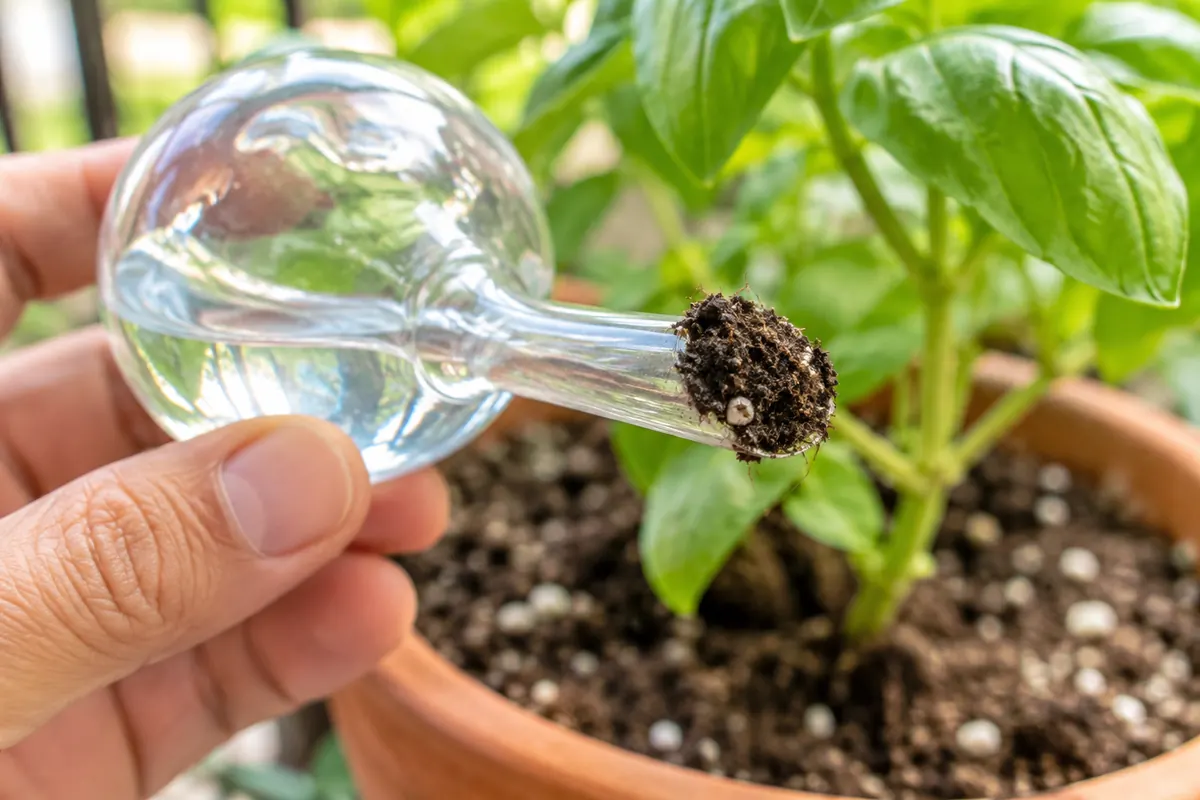
The plant is still wilting
The pot holds more soil than one globe can supply. Use two globes on opposite sides, or move to a spike with a large bottle.
The soil stays soggy
The plant or pot doesn’t need constant moisture, or the pot drains poorly. Remove the globe and let the soil dry out.
How to use a watering globe
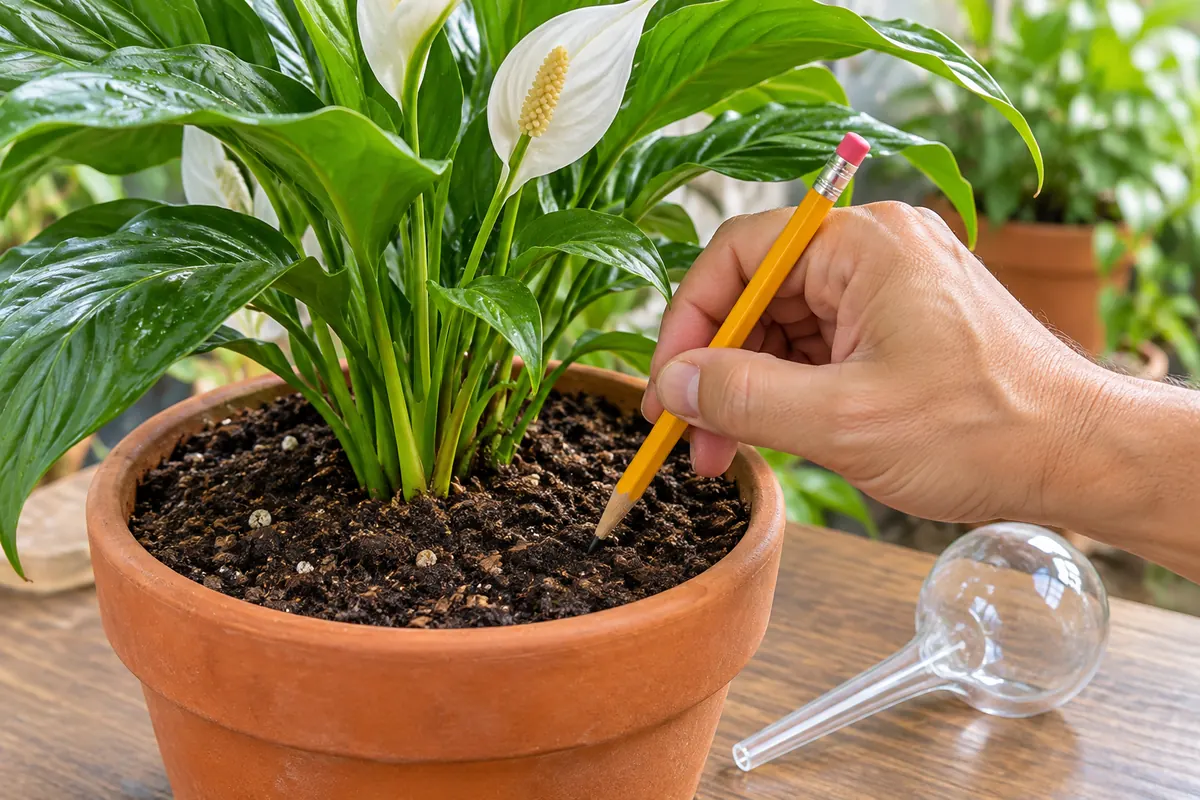
- Water the plant first. Moist soil seals the stem and controls the flow.
- Make a pilot hole. Push a pencil or chopstick into the soil at an angle, a few centimeters from the main stem, avoiding thick roots.
- Fill the globe. Use a small funnel or a squeeze bottle, or fill it under a slow tap.
- Insert it quickly. Cover the stem with your thumb, flip the globe, and push the stem into the pilot hole until the bulb sits just above the soil.
- Check after a day. If the water level hasn’t moved and the soil is drying, the stem may be clogged.
To clean a globe, rinse it with warm water and a drop of dish soap, or swirl in a little vinegar to remove mineral marks. Clean every few weeks so algae and mineral deposits don’t build up.
Glass, plastic or decorative globes?
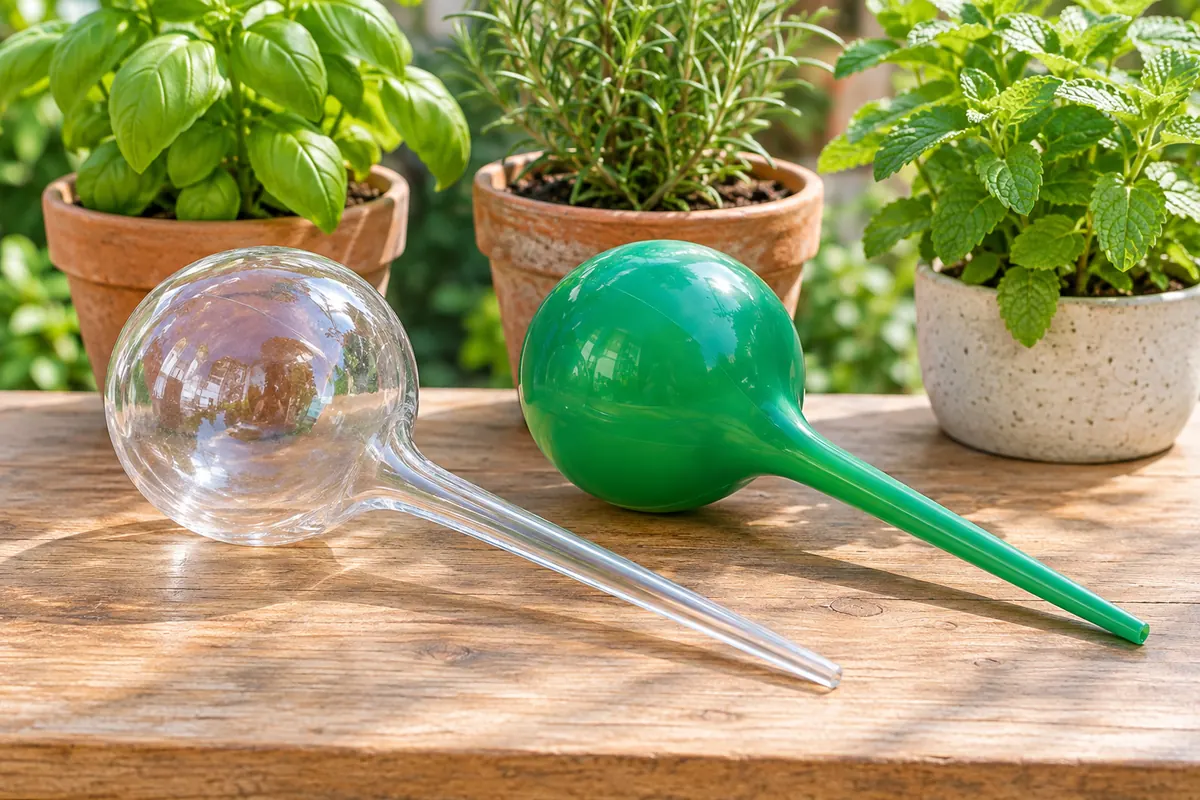
- Glass globes look the nicest and are easy to clean, but they can break if a pot tips over. Keep them out of reach of pets and small children.
- Plastic bulbs are cheaper and won’t shatter, which makes them better outdoors and on balconies.
- Decorative globes (birds, mushrooms, colored glass) work the same way. Choose by size, not looks: a bigger bulb holds more water.
Watering globes vs spikes vs self-watering planters
| Method | Holds | Best for |
|---|---|---|
| Watering globe | A small amount | Small indoor pots, a few days |
| Terracotta spike + bottle | As much as the bottle | Medium pots, several days |
| Self-watering planter | A built-in reservoir | Herbs and vegetables, about 1 to 2 weeks |
If globes empty too fast for your plants, a terracotta spike with a large bottle is the next step up.
How watering spikes work | Self-watering planters | Watering plants on vacation
FAQ
Do watering globes work for outdoor plants?
They can, in shaded pots for short gaps. In full sun and heat they empty quickly, and glass can break, so plastic bulbs or spikes with large bottles are usually better outdoors.
Can watering globes overwater plants?
They rarely flood a pot, because moist soil slows the flow. But they keep soil constantly damp, which can rot succulents, cacti and plants that like to dry out between waterings.
What plants should not use watering globes?
Succulents, cacti, snake plants, ZZ plants, orchids in bark, rosemary and lavender. They need their soil to dry out between waterings, and constant moisture can cause root rot.
How many watering globes do I need per pot?
One for a small pot. For a medium or large pot, or a thirsty plant, use two on opposite sides.
Can I use watering globes for vacation?
For a long weekend, yes. For a week or more, use a self-watering planter or a drip kit instead. See the vacation watering guide.
Pick the right self-watering method
Compare globes, spikes, planters and drip kits side by side, with a free chart.
Open the Self-Watering Plant Guide