 By Giovanni Carlo P. Bagayas (Gio), home gardener since Grade 5. Updated .
Some links in this guide are Amazon affiliate links. If you buy through them, I may earn a small commission at no extra cost to you. Disclosure.
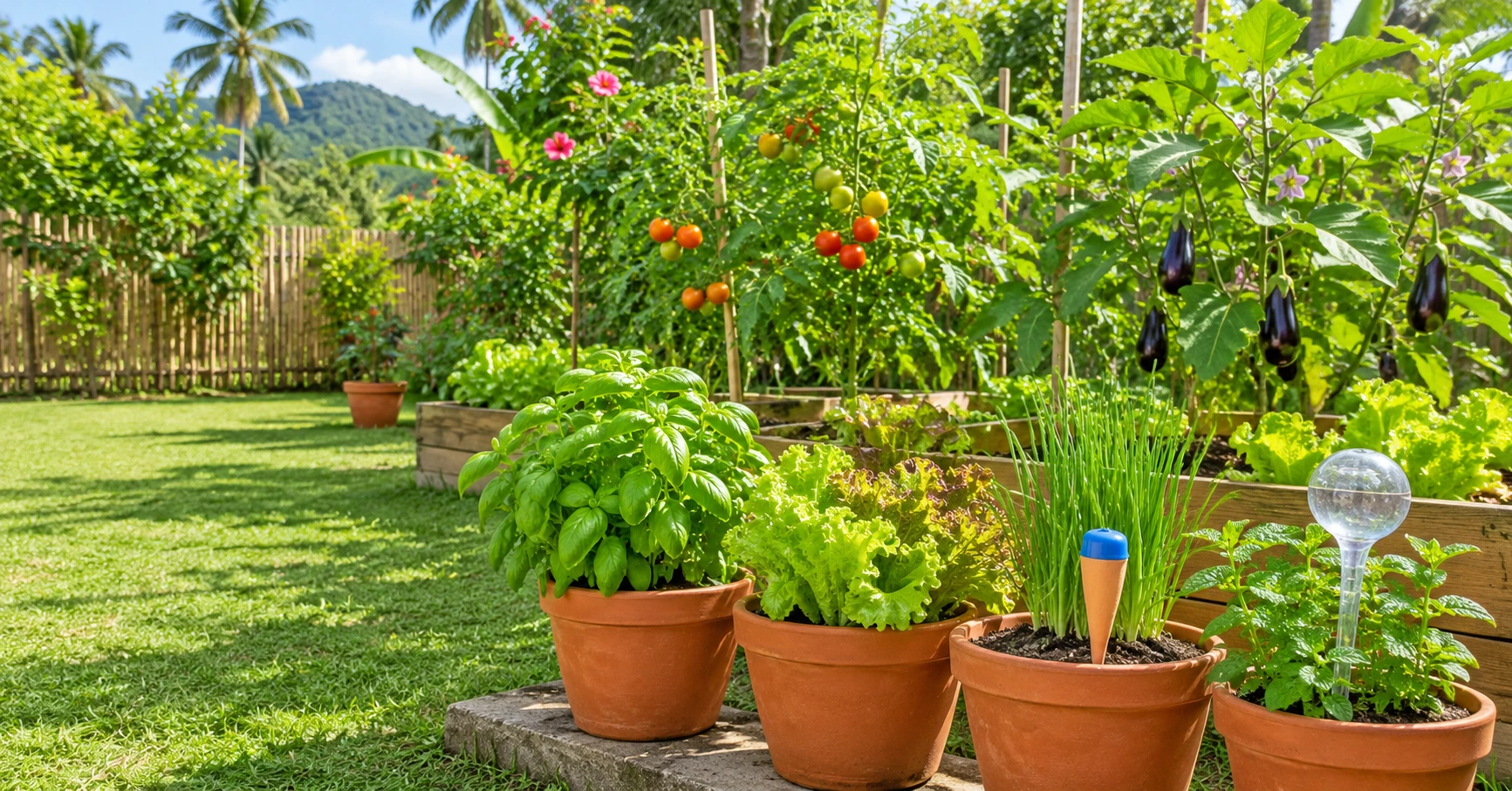
The best self-watering method depends on how long you’ll be away and how many pots you have. For a few days and a few small pots, use watering globes or ceramic spikes. For a week or more, use self-watering planters with a reservoir. For many pots or a whole balcony, use a drip irrigation kit with a timer.
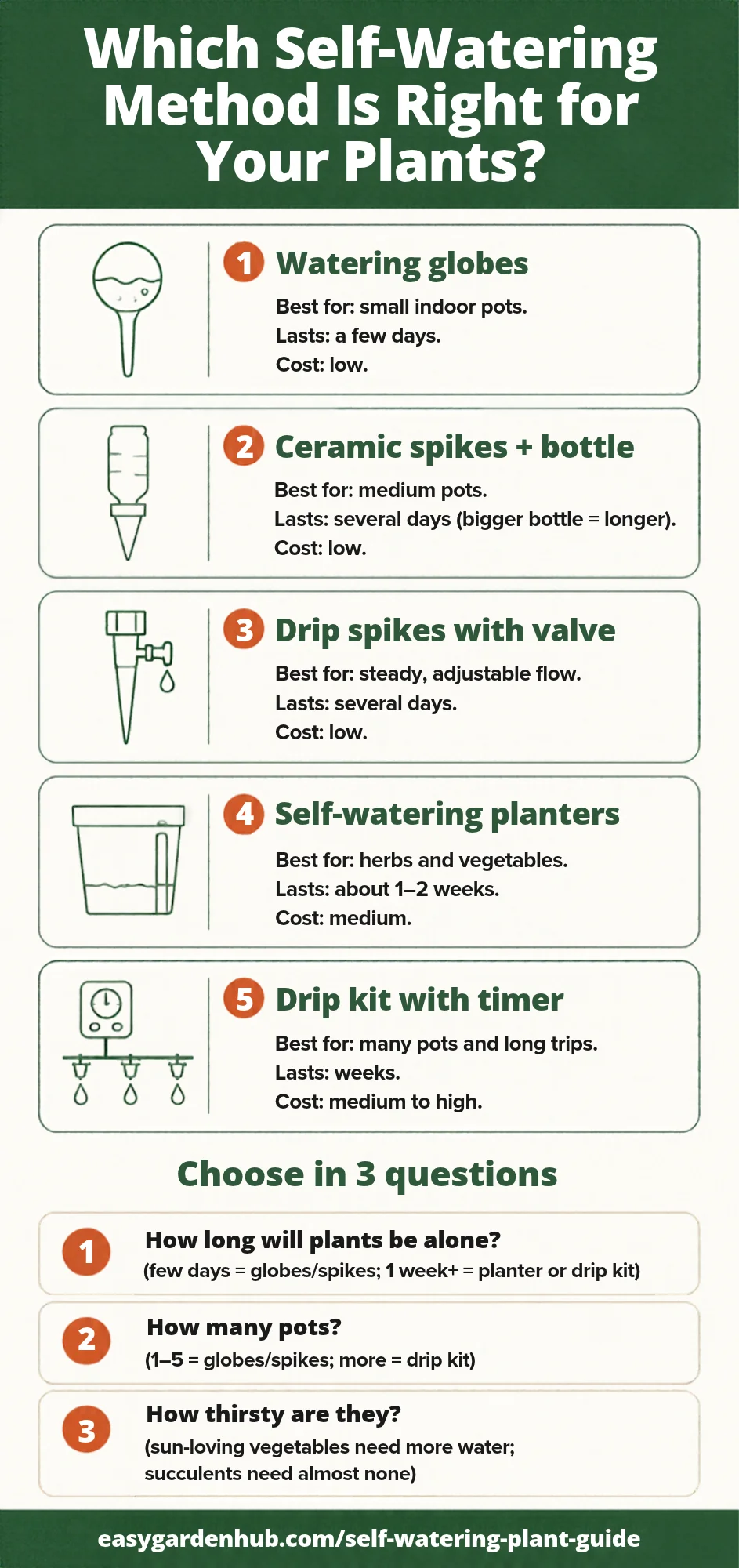
Self-watering methods compared
All self-watering methods do the same job: they hold a reserve of water and release it into the soil slowly, usually as the soil dries. They differ in how much water they hold, how many pots they can serve, and how much setup they need.
| Method | Best for | Typical gap covered | Setup | Cost |
|---|---|---|---|---|
| Watering globes / bulbs | Small to medium indoor pots | A few days | Push into soil | Low |
| Ceramic (terracotta) spikes | Medium pots, reusing bottles | Several days, depends on bottle size | Soak spike, add bottle | Low |
| Drip spikes with valve | Pots that need steady, adjustable flow | Several days | Set drip rate | Low |
| Self-watering planters | Herbs and vegetables in containers | About 1 to 2 weeks | Fill reservoir | Medium |
| Drip kit with timer | Many pots, balconies, long trips | Weeks, if the water supply lasts | Tubing, emitters, timer | Medium to high |
How long each method lasts changes with pot size, plant type, heat and sun. Always test a new setup at home for a few days before you leave.
How to choose in 3 questions
- How long will the plants be alone? A long weekend suits globes or spikes. A week or more calls for a reservoir planter or a drip kit.
- How many pots? One to five pots work with globes or spikes. Past that, a single drip kit is easier than refilling many small reservoirs.
- How thirsty are the plants? Tomatoes, peppers and leafy greens in full sun drink fast and need more water than a globe holds. Succulents need very little and often do better with no device at all.
Self-watering gear I recommend
One pick for each method, so you can match it to your pots and trip length from the comparison above.
Miles Kimball Multicolored Watering Globes
Classic glass globes that release water as the soil dries. Easy to refill and they look good on a windowsill.
Best for: Small indoor pots and short trips
Check price on AmazonModern Innovations Terracotta Self-Watering Spikes
Unglazed clay spikes that seep water slowly. Pair them with a large bottle to cover longer gaps.
Best for: Medium pots, using bottles you already have
Check price on AmazonLABOTA Adjustable Drip Watering Spikes
A small valve lets you set how fast each spike drips, so you can match it to each plant.
Best for: Thirsty plants that need a steady flow
Check price on AmazonSelf-Watering Planter with Water Level Indicator
A bottom reservoir with a water gauge, so you can see when it needs a refill.
Best for: Herbs and vegetables, week-long gaps
Check price on AmazonProgrammable Automatic Drip Irrigation Kit
Runs on a schedule and feeds several pots at once from one water source.
Best for: Many pots and long trips
Check price on AmazonAmazon affiliate links. Prices and availability change, so check the current price on Amazon. As an Amazon Associate I earn from qualifying purchases.
[EDIT: Write 2 to 3 sentences on what you use in your own backyard and how long it lasts in Labangan’s heat. Example format: “On my potted chili and pechay, ceramic spikes with 1.5-liter bottles last about X days in full sun.”]
[EDIT: One honest failure, e.g. a spike that clogged or a globe that emptied too fast, and what you changed.]
Do watering globes work?
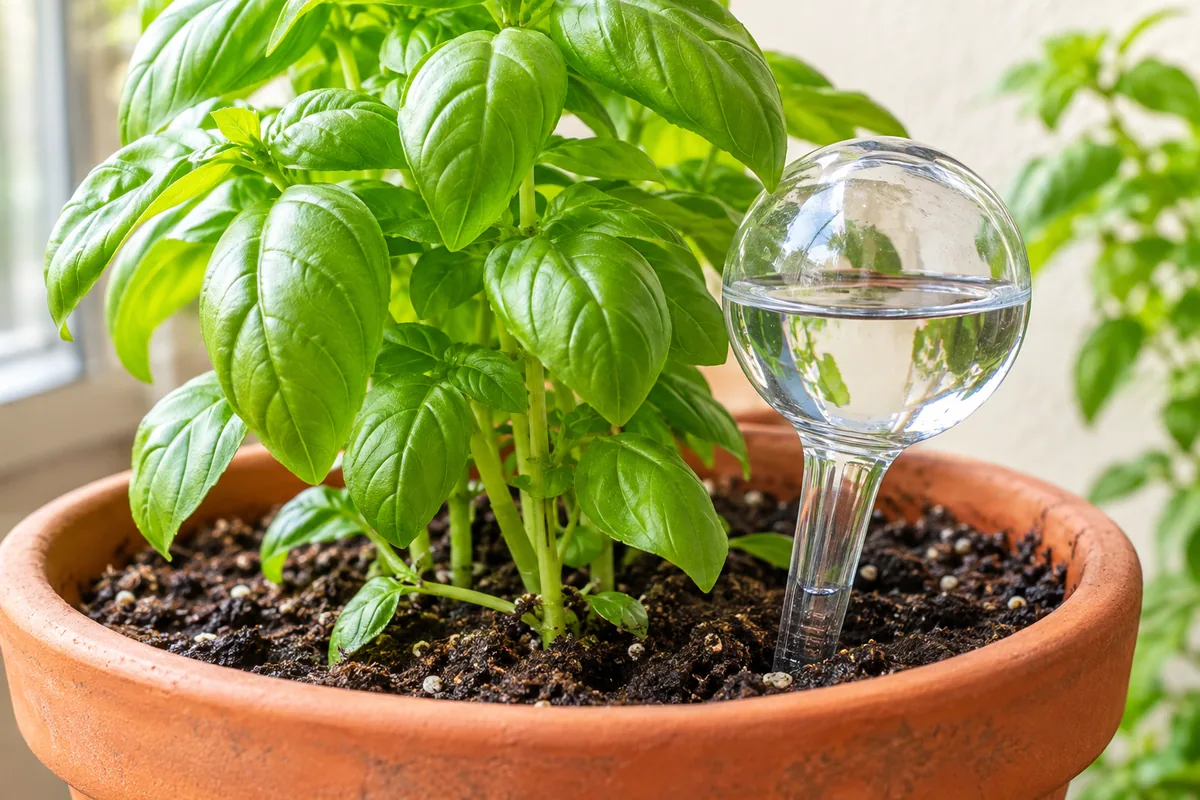
Yes, for short gaps in small to medium pots. A watering globe is a glass or plastic bulb with a long stem. As the soil around the stem dries, air enters the stem and water flows out, so the globe releases water roughly as the plant needs it.
They hold too little water for large containers or thirsty vegetables in hot sun, and the stem can clog with soil. Clean the stem between refills.
Read the full watering globes test
Do self-watering spikes work?
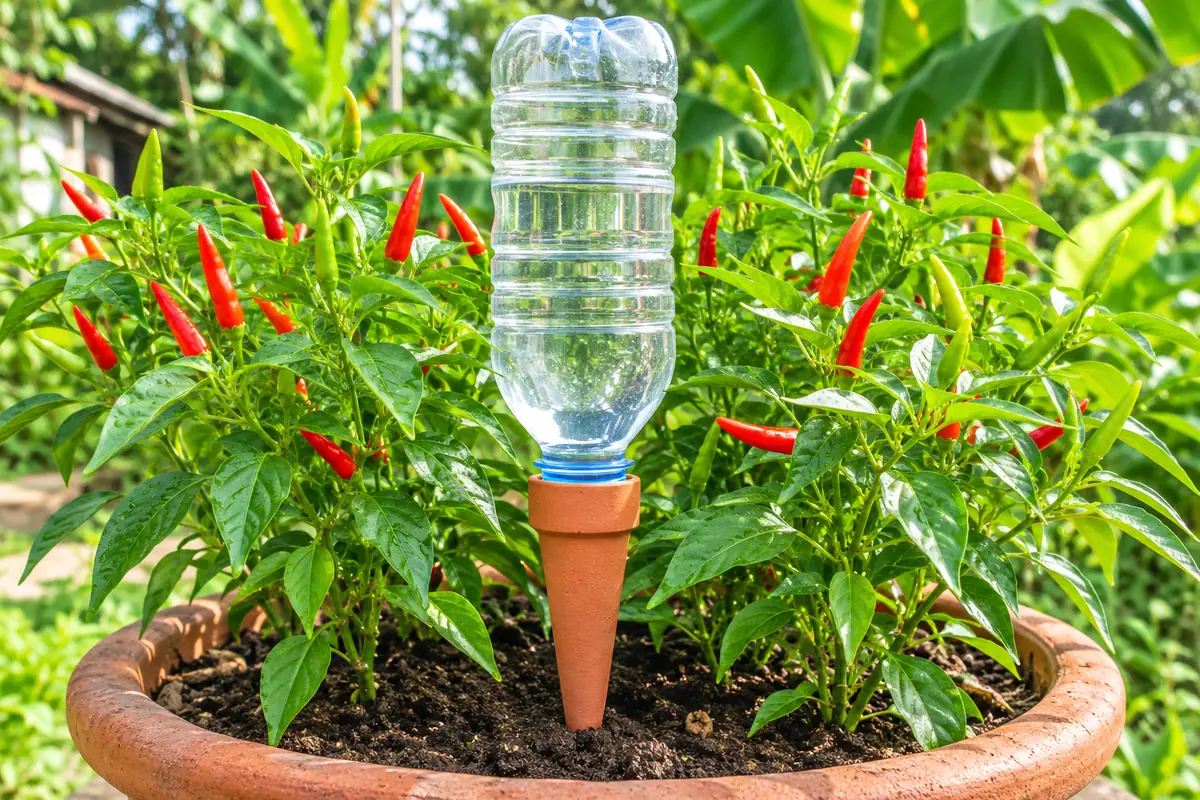
Yes. Ceramic spikes are made of unglazed terracotta, which lets water seep through slowly as the soil dries. You attach an upturned bottle, so a bigger bottle means a longer gap. Drip spikes work differently: they let water drip out at a rate you set with a small valve.
Soak ceramic spikes in water before use so they start flowing, and check them in the first two days. Hard water can clog the pores over time.
How watering spikes work | Spikes review: are they worth it? | Drip irrigation spikes
When is a self-watering planter worth it?
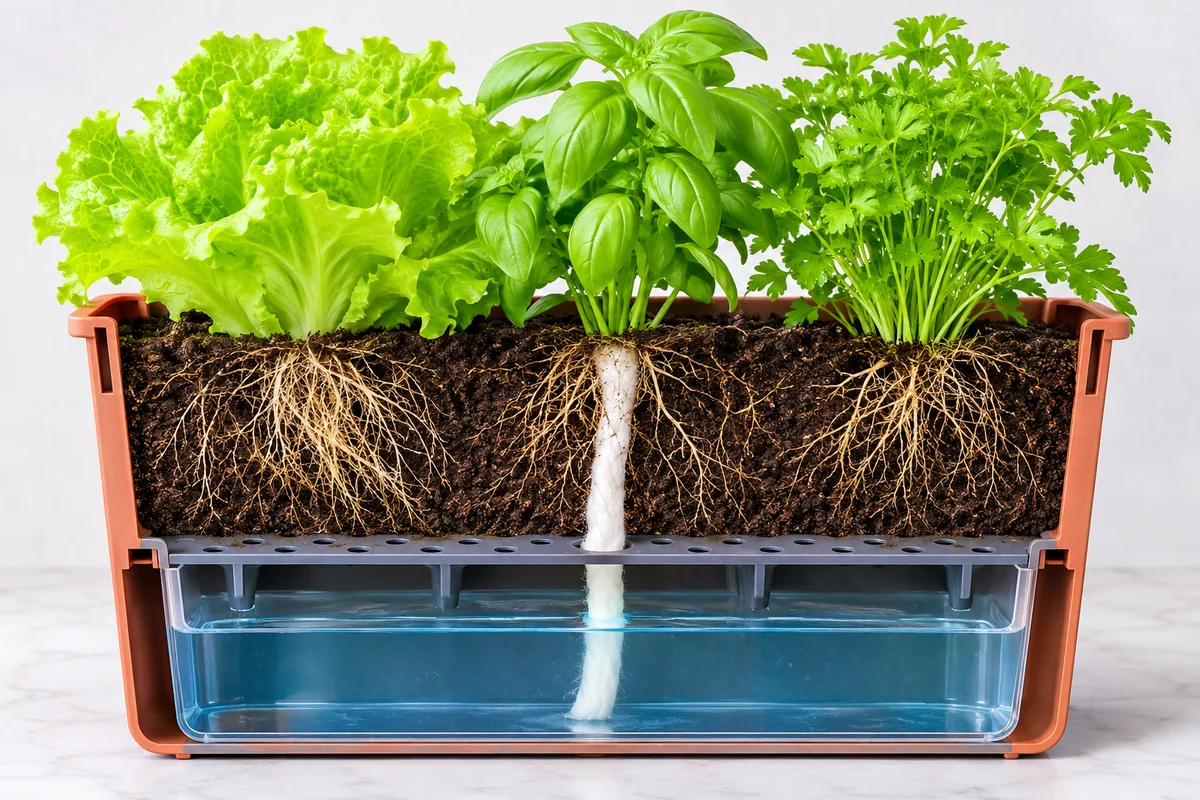
A self-watering planter is worth it when you grow herbs or vegetables in containers and can’t water every day. It has a water reservoir at the bottom and a wick or soil column that draws water up to the roots, so the soil stays evenly moist.
Most have an overflow hole and a water-level gauge. Outdoors, the overflow hole matters: without it, heavy rain can flood the reservoir and drown the roots.
Best self-watering planters for balconies
When do you need an automatic watering system?
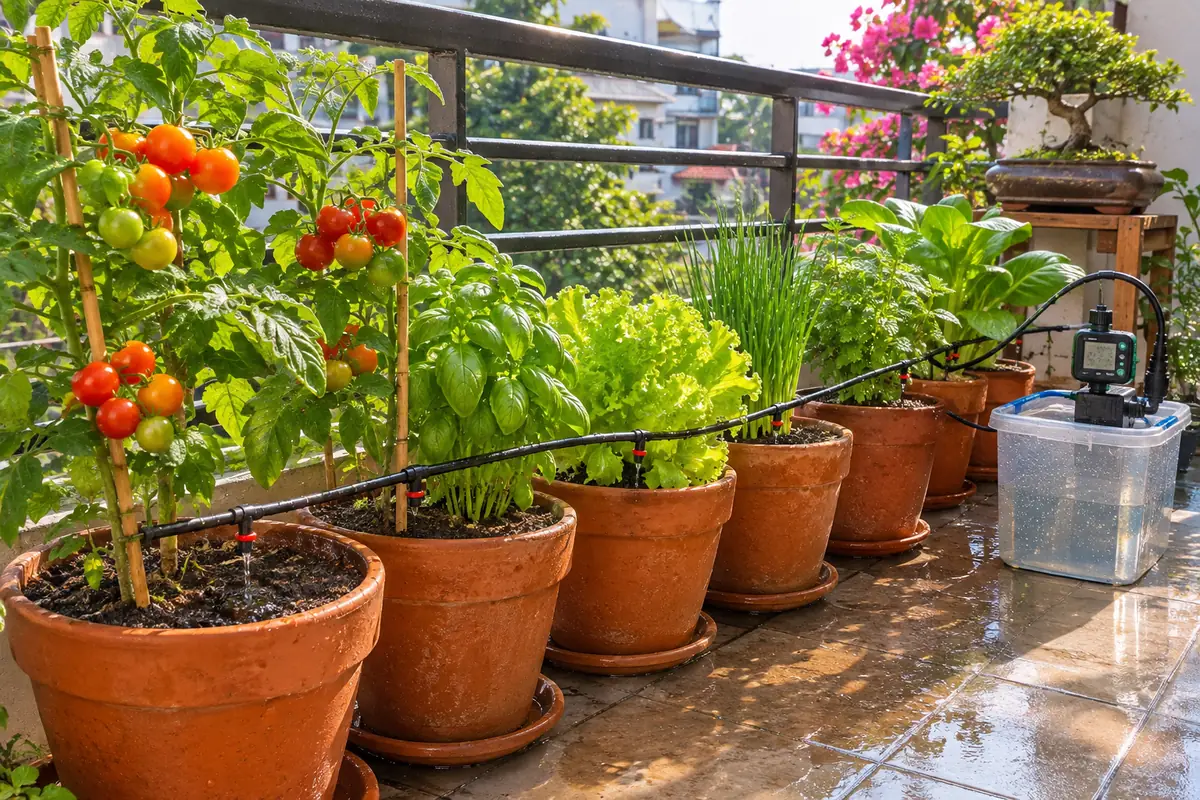
You need an automatic system when you have more pots than you can manage with globes or spikes, or when you’re away for more than a week. A basic drip kit uses thin tubing and small emitters fed by a tap or a pump in a water container, controlled by a timer.
Automatic plant watering systems explained | Best plant watering systems | Indoor plant watering systems
How do you water plants while on vacation?
Water deeply the day before you leave, move pots out of direct afternoon sun, and group them together so they share humidity. Then match the device to the trip length: globes or spikes for a few days, reservoir planters or a drip kit for longer trips.
Can self-watering overwater plants?
Yes, if the soil can’t drain or the plant needs dry spells. Succulents, cacti and some orchids can rot if their soil stays moist. Always use pots with drainage holes, and check the soil before topping up a device.
A soil moisture meter takes the guessing out of it: water only when the reading shows the root zone is drying.
Do automatic watering systems damage plants? | Soil moisture meters
Common mistakes
- Leaving for a trip without testing the setup at home first.
- Pushing globes or spikes into dry, compacted soil, which blocks the flow. Water the pot first.
- Using one small globe for a large pot of thirsty vegetables.
- Forgetting to clean stems and spikes, so they slowly clog.
- Putting moisture-loving and drought-loving plants on the same watering setup.
FAQ
How long do watering globes last?
Usually a few days. Small pots in shade last longer; large pots of vegetables in full sun empty a globe much faster.
Are self-watering spikes better than globes?
Spikes paired with a large bottle hold more water, so they cover longer gaps. Globes look neater indoors. For thirsty plants, spikes are usually the better choice.
Can I use self-watering devices for succulents?
Generally no. Succulents need their soil to dry out between waterings, and constant moisture can cause root rot.
What is the cheapest way to self-water plants?
A DIY bottle method: an old plastic bottle with small holes in the cap, pushed upside down into the soil, or a cotton rope wick running from a container of water into the pot.
Grow vegetables in small spaces
My step-by-step e-book walks you through growing food in containers, including how to keep them watered.
See the garden e-books